Cheng Lab
Baylor College of Medicine, BCM-Alkek Graduate School
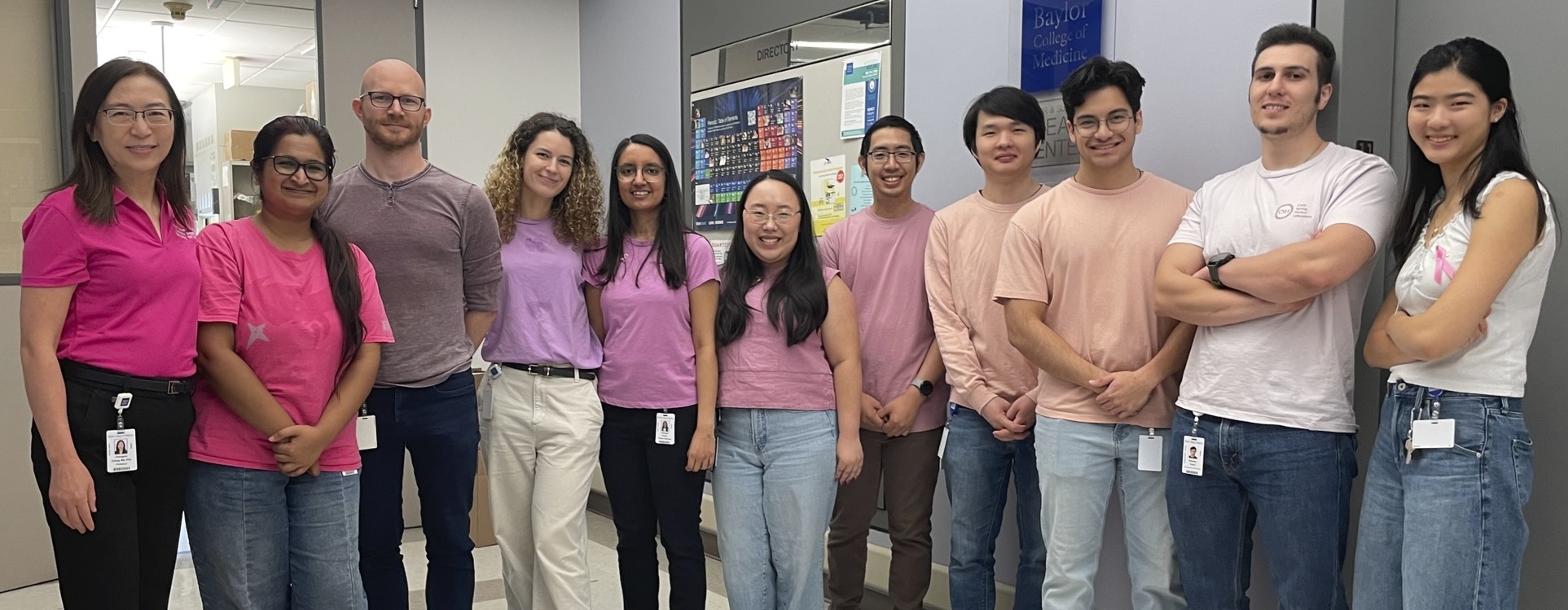
The Cheng Lab seeks to transform discoveries in RNA biology into innovative strategies to understand, prevent, and treat metastatic breast cancer. Working at the interface of RNA biology, cancer biology, and immunology, we investigate the molecular mechanisms by which RNA processing and surveillance govern breast cancer metastasis, tumor-immune interactions, and therapeutic outcomes.
Our research established alternative RNA splicing as a fundamental regulator of epithelial-mesenchymal transition (EMT), a developmental program that is frequently reactivated during tumor metastasis and recurrence. We have also uncovered a previously unrecognized role for RNA-binding proteins in maintaining transcriptome integrity. We found that these proteins suppress aberrant RNA processing, including cryptic splicing events that can generate immunostimulatory double-stranded RNAs and potentially tumor-specific neoantigens. We are investigating how disruption of these RNA quality-control mechanisms reshapes immune signaling and the tumor microenvironment, revealing new opportunities for cancer immunotherapy.
To address these questions, we integrate molecular biology, functional genomics, computational biology, genetic models, and patient-derived samples to define RNA regulatory networks that drive cancer progression. We work closely with physician-scientists to translate our discoveries into biomarkers and RNA-based therapeutic strategies for metastatic breast cancer while developing new genomic and molecular approaches to study RNA regulation in tumors and patient samples. Ultimately, we aim to harness discoveries in RNA biology to develop innovative therapeutic strategies that improve outcomes for patients with metastatic breast cancer.
See the Team, Research, Publications, and Join Us pages for more.
news
| Jul 15, 2026 | July 2026 — Congratulations to Aveksha Sharma, who won the CPRIT Postdoctoral Training Award! Way to go Aveksha! |
|---|---|
| May 15, 2026 | May 2026 — Welcome graduate students Yousef Khashana and Ruiying Ma to the team! |
| Apr 15, 2026 | April 2026 — Congratulations to Khushali Patel for her renewal of the TPEHS postdoctoral training grant! |
| Dec 20, 2025 | December 2025 — Congratulations to Georg Bobkov and Khushali Patel for their paper on tumor cell clustering, accepted in Nature Communications. Read this to learn more. |
| Dec 10, 2025 | December 2025 — Congratulations to Bree Lege for her paper discovering new CTC biomarkers for TNBC patients. Read this to learn more. |
| Nov 15, 2025 | November 2025 — We are awarded the CPRIT Individual Research Grant to investigate tumor immunogenicity of TNBC through cryptic splicing-derived neopeptides. |
| Oct 15, 2025 | October 2025 — Congratulations to our MD/PhD student Nicole Wang. She successfully defended her PhD thesis and is going back to medical school! |
| Sep 15, 2025 | September 2025 — Chonghui was selected as the Stuart Scott Memorial Cancer Research Scholar, V Foundation. |
| Jun 20, 2025 | June 2025 — Congratulations to Georg Bobkov for his awarded U Pilot grant! |
| Jun 10, 2025 | June 2025 — Congratulations to Bree Lege who received her PhD degree! Well done Bree, and best wishes! |